
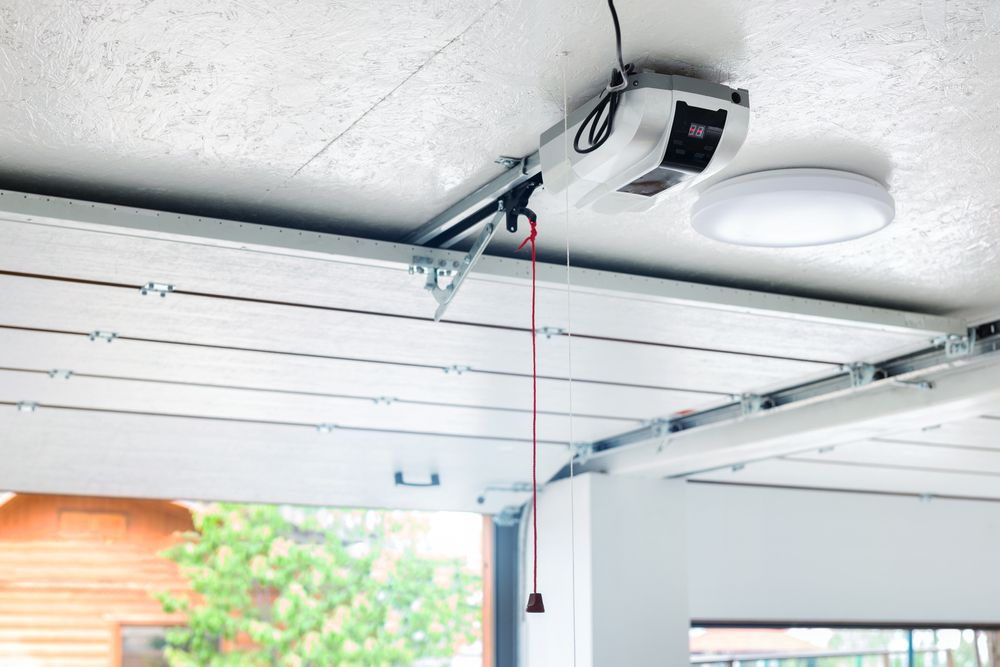

Openers That Cycle Without Guessing What They'll Do
Garage door opener repair in Prior Lake for units that are noisy, unresponsive, or reversing without contact
An opener that reverses before the door reaches the floor, fails to respond on the first press, or grinds audibly through every cycle is signaling a specific mechanical or electronic fault — not general wear that resolves itself. Apex Garage Door, LLC diagnoses opener problems on-site, identifying whether the fault is in the logic board, the force and limit settings, the drive mechanism, or the safety sensor alignment. That distinction matters because the repair path for each is different, and replacing hardware that is still functional adds cost without solving the actual problem.
The diagnostic process covers both the opener unit and its interaction with the door itself, because an opener cycling a door that is out of balance or binding on a roller will display symptoms — noise, hesitation, reversal — that disappear once the door is corrected rather than the opener. Apex Garage Door, LLC carries expertise in LiftMaster and Chamberlain openers specifically, which matter because both manufacturers use proprietary logic boards and safety sensor configurations that respond differently to adjustment than generic units. Force and limit settings on these systems are calibrated to the door's actual travel distance and resistance, not default values from the factory.
Schedule a diagnostic visit to identify exactly which component is causing the fault before any repair work begins.
How Opener Repair Addresses the Fault Rather Than the Symptom
Safety sensor misalignment is one of the most frequent causes of unprompted reversal — the door starts down, the sensor beam reads an obstruction that isn't there, and the door goes back up. Realigning the sensors corrects this, but if the sensors are also dirty, corroded at the terminals, or mounted on brackets that have shifted, those conditions have to be addressed at the same time or the problem recurs within days. On older LiftMaster units, sensor wiring runs along the inside track frame and can be pinched or kinked where it meets the wall bracket, which produces intermittent faults that are easy to miss without a systematic inspection.
After repair, the opener should complete a full open and close cycle without hesitation, reversal, or audible strain in the drive mechanism. The wall button and remote should both trigger response on the first press, and the door should stop at consistent positions at the top and bottom of travel — not varying by a few inches from cycle to cycle. Inconsistent stopping position is a calibration issue, not a random one, and it is correctable during the same visit.
Some opener faults are not repairable at a cost that makes sense relative to the unit's age and the cost of a replacement — a logic board failure on a 15-year-old opener is one example where replacement is the more practical path. When that is the case, the recommendation comes with a clear explanation of why, not just a quote for a new unit.
Answers About How Opener Repair Work Gets Done
These questions reflect what Prior Lake homeowners typically ask when an opener is behaving unpredictably, particularly on homes where the system has been in place long enough that the original installation and calibration may have drifted from where it started.
What causes an opener to reverse before the door reaches the floor?
The most common causes are safety sensor misalignment, excessive down-force resistance from a door that is out of balance, or a down-limit setting that does not match the door's actual travel distance — each requires a different adjustment to correct.
How is a LiftMaster or Chamberlain opener diagnosed differently from a generic unit?
These manufacturers use proprietary logic board architecture and sensor communication protocols, so fault codes and calibration procedures are specific to those systems and require familiarity with how each model series stores and displays error information.
Why would an opener work intermittently rather than failing completely?
Intermittent faults usually point to a wiring issue — a pinched sensor wire, a loose terminal connection, or a corroded contact — where the circuit opens and closes depending on temperature or vibration rather than failing in a fixed state.
What is included in an opener repair visit beyond fixing the identified fault?
The visit includes checking door balance, verifying sensor alignment and terminal condition, testing force and limit calibration, and confirming that both the wall button and remote trigger consistent response — not just verifying that the immediate fault is cleared.
How do you know when a repair is a better choice than replacement?
If the drive mechanism and logic board are both functional and the fault is isolated to a sensor, a wiring connection, or a calibration setting, repair is straightforward; when the logic board itself has failed on an older unit, the cost of a new board often approaches the cost of a full replacement unit.
Apex Garage Door, LLC handles opener repair with a diagnostic-first approach, so you know what is actually wrong before any parts are ordered or replaced. Set up a service visit to have the unit inspected and get a clear explanation of what the repair involves.