
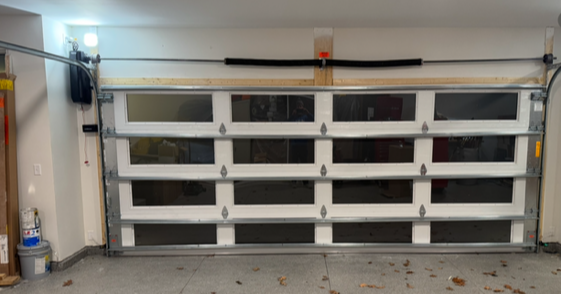

Temperature Control Where Cars and Storage Meet
Insulated Garage Doors in Prior Lake for garages with shared walls or year-round use
Heat moves through uninsulated garage doors at a rate determined by the door's material and the temperature difference between inside and outside air, which in Prior Lake can exceed 60 degrees during January cold snaps. When your garage shares a wall with your home's living space or sits directly below a bedroom, that heat transfer affects your furnace runtime and comfort in adjacent rooms. Apex Garage Door, LLC installs insulated garage doors that reduce thermal transfer through layered construction, using polyurethane or polystyrene cores bonded between steel or aluminum panels.
Insulation works by trapping air within the door's core material, slowing the rate at which heat conducts from the warmer side to the colder side. Polyurethane foam expands to fill the entire cavity between panels, eliminating air gaps, while polystyrene boards are cut to fit and may leave small voids at panel edges. The R-value indicates the insulation's resistance to heat flow, with higher numbers corresponding to better performance. For attached garages in Minnesota, doors with R-values between 12 and 18 provide noticeable temperature stabilization without adding excessive weight that strains opener motors.
Schedule a property evaluation to assess your garage's exposure, opener capacity, and insulation needs based on how you use the space..
What Proper Insulation Requires
Installation includes verifying that your existing opener can handle the added weight of an insulated door, as these doors typically weigh 50 to 100 pounds more than single-layer models. Springs are recalibrated to balance the heavier door, and weatherstripping is replaced along all edges to seal gaps that would otherwise allow air infiltration. Apex Garage Door, LLC completes each installation with a 1½-year warranty covering both the insulated door and the installation workmanship.
After the insulated door is installed, the garage interior becomes noticeably quieter when the door operates, as the insulation dampens vibration and panel rattle. If you heat or cool the garage, the temperature holds more consistently, reducing the load on any climate control equipment. The door's interior surface remains closer to room temperature, reducing condensation that can form on cold steel surfaces during humid spring months in Prior Lake.
Insulated doors don't eliminate the need for weatherstripping, and gaps at the sides or bottom still allow air exchange. The door's thermal performance depends on maintaining intact seals where the door meets the frame and floor. If your garage lacks insulation in the walls or ceiling, the door alone won't transform the space into conditioned living area, but it does reduce the temperature extremes that affect stored items and vehicles parked inside..
Common Questions About This Service
Homeowners in Prior Lake want to understand how insulation affects both comfort and costs before committing to a door upgrade.
What's the difference between polyurethane and polystyrene insulation?
Polyurethane foam adheres to both door skins during manufacturing, creating a bonded structure that adds rigidity and eliminates air pockets, resulting in higher R-values per inch. Polystyrene boards are inserted into the door cavity and held in place by the panel structure, which is less expensive but allows minor air gaps and offers lower R-values for the same door thickness.
How much quieter is an insulated garage door?
Insulated doors reduce noise by 20 to 30 percent compared to single-layer doors because the core material absorbs vibration from the opener mechanism and dampens panel flex as the door travels along the tracks. If your bedroom sits above the garage or shares a wall, the difference is noticeable during early morning departures or late-night arrivals.
When does insulation make the most difference?
Insulation has the greatest impact in attached garages where temperature swings affect adjacent living spaces, in garages used as workshops where you spend extended time, and in homes where the garage sits directly below occupied rooms. Detached garages with no climate control see less benefit unless you're storing temperature-sensitive items like paint, electronics, or recreational equipment.
What R-value should I choose for Prior Lake winters?
Doors with R-values between 12 and 16 provide meaningful thermal resistance for typical attached garages, while R-values of 18 or higher suit garages that are heated or used as workspaces. Higher R-values add cost and weight, so the decision depends on how much time you spend in the garage and whether adjacent rooms feel drafty during cold months.
How does an insulated door affect my opener?
Heavier doors require openers with higher lifting capacity, typically 3/4 horsepower or greater, and springs must be adjusted to counterbalance the added weight. If your current opener struggles with a lighter door or is more than 10 years old, upgrading the opener at the same time prevents premature motor failure or slow operation.
Apex Garage Door, LLC installs insulated garage doors across Prior Lake with attention to opener compatibility and seal integrity. Request an estimate to review insulation options and R-values suited to your garage configuration and usage.