
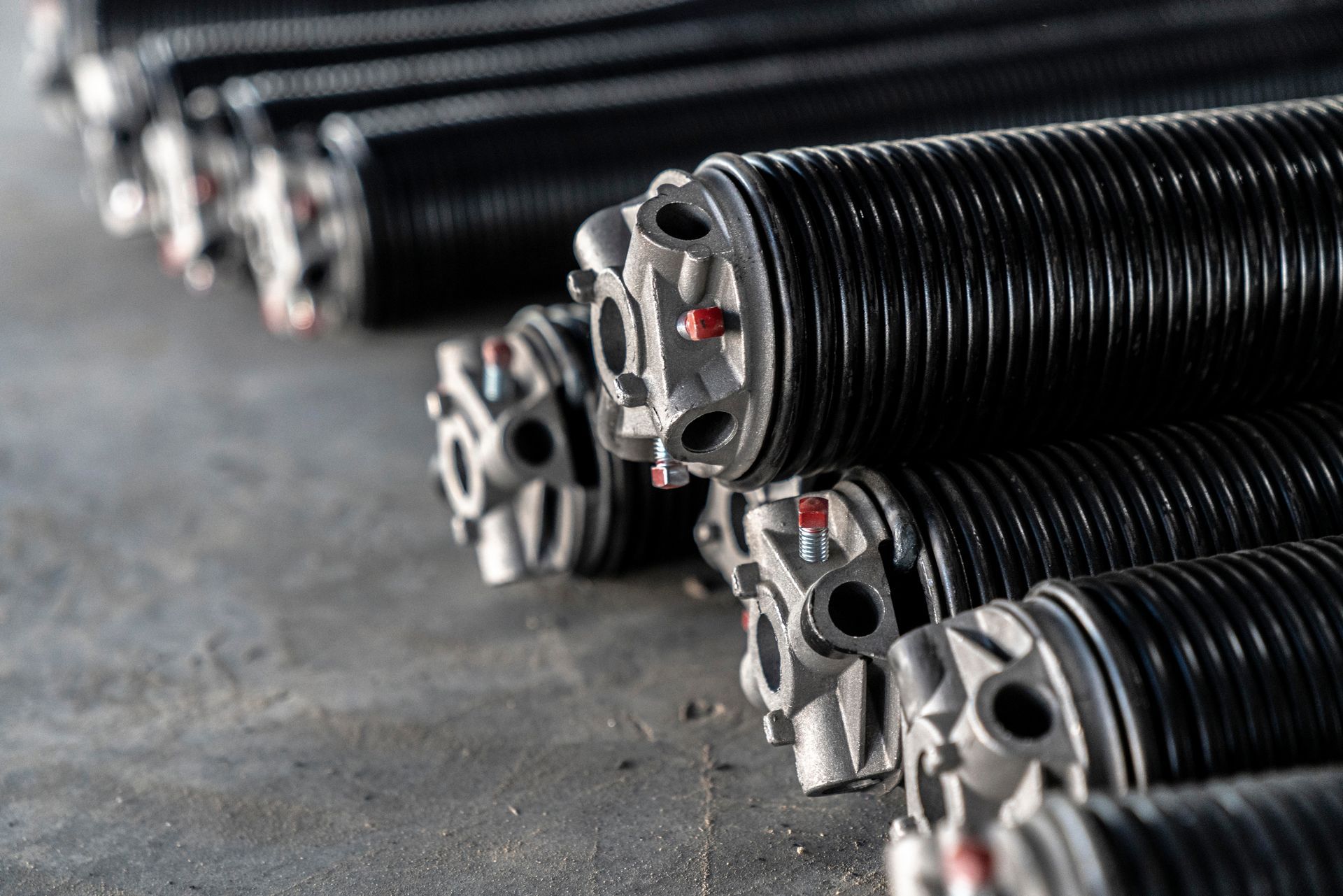

Springs Replaced Before the Door Becomes a Hazard
Broken garage door spring replacement in Prior Lake for doors that are stuck shut, won't stay up, or feel dangerously heavy to lift manually
A snapped torsion spring does not just inconvenience — it removes the counterbalance that makes a garage door liftable at all. Without a functioning spring, a two-car garage door can weigh 150 pounds or more in dead weight, and attempting to force it open manually puts that load on the cables, drums, and opener in ways none of those components are designed to handle. Apex Garage Door, LLC sends technicians to Prior Lake properties to replace broken springs the same day in most cases, using correctly rated springs for the door's specific weight and height rather than substituting a close approximation.
The replacement process involves releasing any residual tension in the broken spring, removing it from the torsion tube, and installing a new spring wound to the turn count calculated for that door's dimensions and weight. Torsion springs are not interchangeable by length alone — wire diameter and inside diameter determine the spring's cycle rating and the amount of torque it delivers per quarter turn, and installing an underrated spring means it reaches its fatigue limit in a fraction of the cycles a correct spring would last. Prior Lake homes that were built during the suburban expansion of the late 1990s and early 2000s often have standard door heights and widths where spring sizing is straightforward, but any modification to the original door — added insulation, heavier panel material, conversion from extension to torsion system — changes the required specification.
Contact Apex Garage Door, LLC to have a technician assess the spring failure and confirm the correct replacement specification before the work begins.
What the Spring Replacement Process Actually Involves
Torsion spring replacement is done with the door in the closed position and all tension relieved from the system before any components are touched. The spring is unwound using winding bars — not an impact tool, which cannot be controlled precisely enough on a loaded spring — then removed from the shaft and replaced with the new spring, which is then wound to the correct turn count and tested for consistent tension across the full travel of the door. Cable condition and drum seating are checked during the same visit, since a spring failure that has been cycling for some time often puts additional wear on those components.
After replacement, the door should lift from the floor with minimal effort — a properly balanced door requires only a few pounds of force to raise manually — and should hold position when stopped at mid-travel without drifting up or down. If the door drifts noticeably in either direction when released at mid-travel, the spring tension needs further adjustment, and that is handled before the job is considered complete.
Homeowners with a single torsion spring setup should know that most manufacturers recommend replacing both springs simultaneously when one breaks, because a spring that has already cycled as many times as the broken one is statistically close to its own failure point — replacing only the broken spring often means a second service call within months.
Questions Before Starting Your Spring Replacement
Spring replacement generates specific questions about safety, specification, and what the work includes, particularly from homeowners who have not dealt with this type of failure before and want to understand what is actually involved before agreeing to the repair.
Why can't a broken torsion spring be repaired rather than replaced?
Torsion springs fail by metal fatigue at the point where the coils have flexed past their yield limit — the break is a structural failure of the material itself, not a separation that can be rejoined or reinforced, so replacement is the only functional correction.
How is the correct spring specification determined for a specific door?
The required spring is calculated from the door's measured weight and height, with wire diameter and inside diameter selected to deliver the correct inch-pounds of torque per turn — using a spring that is close in size but not correctly rated shortens its service life significantly.
What happens to the cables and drums when a spring breaks suddenly?
When a spring snaps under full tension, the sudden release can jolt the cables off the drums or leave them slack and wrapped incorrectly; cable condition and drum seating are checked as part of the replacement process rather than assumed to be undamaged.
How do you verify the replacement spring is tensioned correctly?
The door is tested manually at the closed position — it should lift with minimal resistance — and then released at mid-travel; a correctly tensioned door holds its position without drifting, and any drift indicates the spring needs additional adjustment before the job is finished.
What is the difference between a torsion spring system and an extension spring system in terms of replacement?
Torsion springs mount on a shaft above the door and store energy by winding; extension springs run along the horizontal tracks and stretch under load — the replacement procedure, safety precautions, and component specifications differ between the two systems, and the correct approach depends on which type is installed.
Apex Garage Door, LLC handles broken spring replacement with same-day service in most cases, and every replacement includes a balance check before the technician leaves the property. Set up a service call to have the failed spring assessed and the correct replacement specification confirmed.